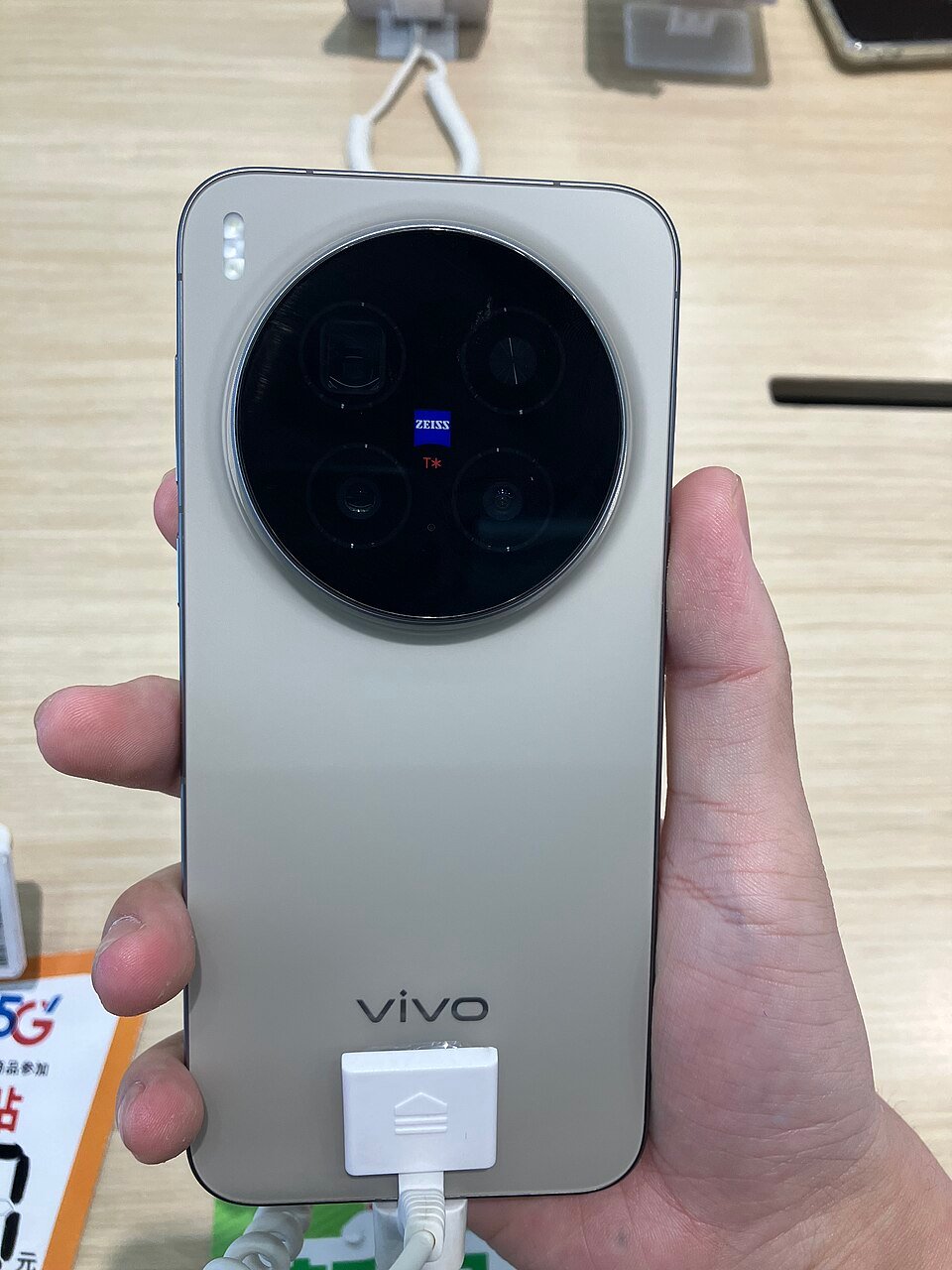
Is the Vivo X300 Pro worth buying?
The Vivo X300 Pro deserves consideration if photography is a central reason for buying a premium phone. The more important question is whether you like the photographs and the everyday software experience together. A camera-focused purchase still has to work as your daily phone.
Our assessment is a conditional recommendation for buyers willing to compare actual samples and try OriginOS before purchasing. We would not recommend paying the premium solely for the ZEISS name or the telephoto resolution. Neither substitutes for checking the subjects you photograph most.
Key takeaways
- The India model has a published 6,510 mAh typical battery and 90 W charging. Do not substitute specifications from a different regional edition. [1]
- The camera system is the main reason to shortlist it, but processing style should be checked using original samples.
- Gadgets 360 published a positive camera assessment and disclosed that Vivo funded travel and accommodation for the review event. [3]
- Selected Reddit accounts raise questions about processing and software. They do not establish a defect rate.
- The India launch reference was ₹1,09,999 for 16 GB + 512 GB. That is a historical figure, not a live offer. [2]
Vivo X300 Pro specifications and India price context
We checked the specifications below against the linked manufacturer documentation, including regional details and the conditions attached to each figure. A maximum refresh rate or charging rating describes a capability under suitable conditions, not what every app or charging session achieves.
| Item | Published information | Evidence |
|---|---|---|
| Processor | MediaTek Dimensity 9500 | [1] |
| Display | 6.78-inch AMOLED; 1–120 Hz LTPO | [1] |
| Battery and charging | 6,510 mAh typical; 90 W FlashCharge | [1] |
| India storage configuration | 16 GB RAM + 512 GB storage | [1] |
| Rear cameras | 50 MP main, 50 MP ultrawide, 200 MP telephoto | [1] |
| India launch price | ₹1,09,999 for 16 GB + 512 GB | [2] |
Price: treat the camera premium as a deliberate choice
Vivo's India announcement priced the X300 Pro at ₹1,09,999 for the listed storage configuration. That historical starting point helps explain the intended market position, but it does not establish today's transaction price. We have not checked out a device or confirmed local stock. [2]
At this level, the right comparison is not simply with a cheaper phone that shares the same processor. Ask what the entire camera experience adds to your routine. If you regularly photograph people, travel or events, that experience may be worth investigating. If the camera is mostly used for receipts and occasional social posts, it may be an expensive way to solve a modest need.
Keep optional photography accessories separate from the phone budget. An attachment can change how you carry and use a device. Before purchasing one, try attaching it, framing a subject and packing it away. A feature that is impressive on a demonstration table may be less useful if you leave the accessory at home.
The final quote should show the phone, accessories, protection plan and any payment-linked offer individually. That makes it easier to compare Vivo with an alternative whose advertised price includes a different bundle. It also prevents a large promotional saving from obscuring how much cash you actually spend.
Camera: where the case for the X300 Pro begins
The official camera specification gives the X300 Pro a clear photography-oriented identity. Our interest is less in the largest number than in how the lenses and processing work together. A useful premium camera should produce results you enjoy without requiring a different workaround for every scene.
Gadgets 360's review strongly praised the camera experience and described the phone as a capable everyday flagship. It also wished for more storage choices. The review disclosed Vivo-sponsored flights and accommodation for an event in Mauritius. That disclosure belongs beside the assessment so readers can evaluate the context themselves. [3]
Portraits: examine the parts that look ordinary
When comparing portrait examples, pay attention to hair, glasses, ears and clothing edges. Look at the relationship between the subject and background rather than only how blurred the background becomes. A striking effect is not necessarily a convincing result.
Try a portrait with the subject moving slightly or turning away from the camera. Ask whether the result still looks like the person in front of you. Skin smoothing and colour preferences are subjective; the best choice is the one whose output you are comfortable keeping and sharing.
For family photography, the proportion of usable moments matters more than a single spectacular demonstration. The proportion depends on the subjects, lighting and technique used. Look for reviewers who publish ordinary situations as well as carefully selected showcase pictures.
Telephoto: match the distance to the subject
A telephoto camera can be useful when you cannot move closer, but the word “zoom” covers different situations. A distant building, a performer under stage lighting and a person across a room create different demands. Compare examples resembling your own use before judging the system.
Keep optical capture, cropping and software reconstruction conceptually separate. If you plan to photograph fine text, wildlife or faces at a distance, inspect the saved details. An attractive overall impression may hide a texture that looks less natural on close inspection.
Also consider the practical rhythm of shooting. Can you reach the required setting quickly? Are the controls legible outside? Do you like the normal camera mode enough to use it when there is no time to adjust anything? These are useful questions even without a benchmark chart.
- Compare the same subject across lenses and look for changes in colour and exposure.
- Use original files where available, not only compressed social-media uploads.
- Check moving subjects and indoor scenes alongside daylight landscapes.
- Treat separately sold camera accessories as an additional decision, not a required part of the phone.
Battery: keep the India specification attached
Vivo's India parameter page lists the battery and charging figures shown above. The market label matters: an overseas review may describe a different battery configuration, package or software release. A shared product name does not make every regional detail interchangeable.
This review does not provide an original battery-runtime measurement. The published reviewer's workload matters when interpreting the results; typical capacity alone cannot establish a number of days. Photography-heavy use should be considered separately from a day dominated by messaging and reading.
Build your evaluation around your most demanding normal schedule. If travel involves navigation, mobile data and frequent photographs, look for evidence from that combination. A long result from passive playback answers a narrower question.
Charging is another case where the printed rating is not the complete experience. Check the equipment required and whether your existing adapter supports the intended charging mode. A short top-up can be valuable, with the time gained depending on your equipment and charging conditions.
Photographing all day is a different workload
Someone who buys the X300 Pro mainly for its camera should judge endurance while using the camera. A device may fit a desk-based routine and still require a top-up on a trip. Plan around access to power rather than assuming a favourable battery comment describes every day.
When comparing owner reports, note the screen brightness, network use, camera activity and software version. Those details help explain disagreement. A dramatic screenshot without context is not a sufficient basis for a purchase or a diagnosis.
OriginOS and the everyday experience
The India specification page identifies OriginOS 6 and Android 16 as the published software baseline. That is not a claim that every device remains on its launch version. Check the current update available for the unit you intend to buy. [1]
The software demonstration should be as deliberate as the camera demonstration. Open notifications, search for a setting, switch between apps and try the keyboard. If you use work applications, ask whether their requirements are supported by the particular regional model.
Do not dismiss interface friction as something you must simply learn to tolerate. Some habits change easily; others affect every interaction. A phone with an appealing camera can still be the wrong purchase if you repeatedly struggle with a task you perform throughout the day.
Vivo's India product page advertises five years of operating-system upgrades and seven years of security updates. That is the manufacturer's commitment, not seven new years beginning whenever you purchase the phone. Confirm the policy and remaining support horizon for the exact regional model. [6]
A long support statement is useful, but it does not answer every ownership question. Ask about repair access, replacement batteries and the support route available near you. Keep those practical details alongside the software promise when deciding how long you expect to own the handset.
Reddit feedback: photography enthusiasm is not universal
In “My Experience with Vivo X300 Pro,” a poster moving from an iPhone describes disappointment with some distant-subject photographs and a painted-looking result despite changing enhancement settings. This is a personal account, not an independently reproduced finding. It is useful because it highlights processing style as something to examine before purchase. [4]
A separate thread, “Vivo X300 Pro – Is anyone else having serious issues?”, reports freezing, settings changes and notification frustration. The poster identifies a global-version device and explicitly questions whether the cause is the device, setup or a broader issue. We cannot resolve that diagnosis from the post. [5]
These examples do not establish how common the reported problems are. We did not verify purchase receipts, contact the authors or collect a representative sample. A support-oriented discussion can attract people with problems, while a launch discussion can attract people excited about a purchase.
The contrast with a positive professional review is not something to smooth away. A reviewer and an owner may use different software, settings and workloads, and they may value different things. Our conclusion is therefore practical: investigate processing preferences and essential app behaviour rather than treating either a glowing review or a complaint thread as the complete story.
No separate verified Google Business Profile or retailer-review dataset was collected for this article. A local service-centre review may help assess a particular repair location, but it cannot establish the quality of the X300 Pro's telephoto camera. We do not merge those categories into a single owner score.
Who should upgrade, and who should wait?
The strongest candidate is someone who regularly uses a phone as their main camera and can identify shortcomings in their existing device. That might be a focal length they lack, controls they dislike or results that repeatedly disappoint in familiar situations. The reason should be specific enough to test.
A recent premium-phone owner faces a higher bar. If your current pictures already satisfy you, the X300 Pro's camera positioning is not by itself a reason to replace the device. Compare the actual images and consider the cost of changing accessories, moving accounts and learning the interface.
For someone coming from an older midrange phone, a store demonstration should include the whole experience. Camera speed, reading comfort, grip and notifications can matter as much as the image you take home. Do not spend the entire demonstration exploring optional photography effects while ignoring those daily tasks.
If the purchase leaves little room for repairs or necessary accessories, consider a less expensive model. A premium camera should fit a sustainable ownership budget. The best decision can be to wait for a better verified offer or to keep a working device until the benefit becomes clearer.
Pros and cons: our buying assessment
| Reason to consider it | Reason to pause |
|---|---|
| Photography-led hardware and camera controls | Output style is subjective; inspect saved files before committing. |
| Positive published camera assessment | That review disclosed manufacturer-funded event travel. |
| Large India battery specification | No original endurance measurement; overseas models may differ. |
| Published long-term support commitment | Check the start point, region and practical local service route. |
How it compares with relevant alternatives
This is a shortlist by buying priority, not a laboratory ranking. Compare actual quotes for equivalent storage, warranty region and condition. Some options cost more; they belong here only if their particular strengths matter enough to justify the difference.
| Alternative | Reason to compare | Decision to make |
|---|---|---|
| Oppo Find X9 Pro | A closely positioned photography-focused rival | Compare portraits, software comfort and equivalent-storage quotes. |
| Xiaomi 17 Ultra | A different approach to camera hardware and colour | Compare original files rather than camera-brand names. |
| Galaxy S26 Ultra | An alternative if handwriting or screen privacy matters | Decide whether those features matter more than camera preferences. |
| iPhone 17 Pro Max | An ecosystem alternative | Include migration and accessory costs, not only the handset price. |
Before you buy: turn the shortlist into a decision
Start with a written quote for the exact model and storage configuration. Separate the cash selling price from a bank offer, an exchange valuation and an instalment plan. A generous exchange allowance still means giving up an asset you own. It should not be described as a discount available to every buyer.
Ask the seller what happens if the delivered device has a fault. Find out whether the remedy is a replacement, an authorised-service assessment or a refund, and which deadlines apply. Keep the answer with the invoice. Return policies vary by seller; check whether an opened phone qualifies for a return.
If buying imported stock, establish the model number, software region and local warranty route before paying. Do not rely on a seller's use of the word “global” alone. Check the requirements that matter to you, including your carrier, payments, work applications and accessories. A cheaper invoice can become an expensive compromise if an essential feature is missing.
A practical demonstration checklist
- Open your normal reading app and adjust the text size. Check comfort, not only a colourful display demo.
- Photograph a familiar subject using ordinary settings. Inspect the saved result rather than only the camera preview.
- Try typing, navigating backwards, searching settings and sharing a file. These actions reveal whether the interface suits you.
- Hold the phone with a case if one is available. Check reach, grip and whether the camera housing gets in your way.
- Ask for a battery-replacement and display-repair quotation from an authorised service route. Use those actual quotes in your ownership budget.
Do not rush account migration. Back up your existing phone, check recovery details and confirm that important files open on the replacement before erasing anything. If your purchase involves an exchange, plan this before handing over the old device. Authentication apps, work profiles and banking applications deserve particular attention.
Treat the first days of ownership as a chance to document your normal routine, not a race to reproduce somebody else's battery screenshot. Note the software version, connectivity and main applications when investigating a concern. That record is more useful in a support conversation than an isolated claim that the phone “should last longer.”
Conclusion
The Vivo X300 Pro is a credible shortlist candidate for a photography-led purchase. The evidence supports shortlisting its camera experience; the final choice depends on your subjects, preferred processing and budget.
Our recommendation is to compare saved photographs, try the software with your essential tasks and verify the local purchase and support conditions. If all three fit, the premium may make sense. If the camera appeal is mostly a specification or a brand partnership, take more time before buying.
For an owner already satisfied with a recent flagship, keeping that phone remains a reasonable conclusion.
Frequently asked questions
What is the Vivo X300 Pro India battery capacity?
Vivo lists 6,510 mAh typical capacity for the India model. Keep that market qualification attached when comparing overseas reviews. [1]
What was the India launch price?
The announced price was ₹1,09,999 for 16 GB + 512 GB. This is not a live checkout quote. [2]
Is the telephoto accessory necessary?
No accessory should be assumed necessary for every buyer. Try the phone alone first, then decide whether a separately sold attachment serves a real use case.
Does this article prove the reported software issues are widespread?
No. The cited Reddit posts are unverified individual reports. They do not establish prevalence or the cause of a problem.
How was this review researched?
We checked the official information, examined a published review and selected owner discussions, and separately verified numerical claims against their cited sources.
Sources, scope and limitations
Research checked on 6 November 2026. Manufacturer documents establish published specifications and promises; published reviews report their authors' tests; community posts are unverified individual accounts. This is a qualitative, selected evidence set, not a systematic owner survey. We did not calculate satisfaction percentages, failure rates or a star rating.
We did not collect a verified-purchase retailer sample or a location-specific Google Business Profile sample. Quora and Instagram are not represented in this edition. G2 and Capterra were not used for these handset reviews. Company-wide Trustpilot scores would mix products, sellers or service experiences and are not substituted for a model-level score here. These limits describe the evidence we actually collected, not an assertion that useful information cannot exist elsewhere.
- Vivo India parameter page. India hardware and published software baseline.
- Vivo India launch announcement. Historical launch price and configuration.
- Gadgets 360: Vivo X300 Pro review. Published firsthand review with event-travel disclosure.
- Reddit: My Experience with Vivo X300 Pro. Unverified camera-processing account.
- Reddit: Vivo X300 Pro serious issues discussion. Unverified software complaints; no prevalence inference.
- Vivo India product page. Manufacturer support commitment.
Read our methodology, commercial disclosures and about the editor. This research edition can be revised when stronger evidence becomes available.